


Why your serum isn't working as you think – and how to truly help your skin.
Dry skin can be frustrating – especially when you think you're doing everything right. You use a high-quality hyaluronic acid serum, apply it daily, pay attention to your skincare routine, and yet your skin still feels tight, looks dull, and dehydrated. What's going wrong?
Welcome to the world of skincare myths and misunderstandings. Hyaluronic acid is a celebrated active ingredient – and rightly so. But many don't know that it can only truly work under specific conditions.
This article debunks false expectations, explains the scientific background, and shows you how to use hyaluronic acid correctly to finally achieve the hydrated, plump skin you desire.

Everyone desires perfectly hydrated and plumped skin like this
Hyaluronic Acid: The Most Popular Active Ingredient with a Catch
Hyaluronic acid is a substance naturally found in the body, primarily known for its ability to bind large amounts of water – up to 1000 times its own weight. This makes it the ultimate moisture booster. In Korean cosmetics, it is almost always part of the formulation – in toners, serums, masks, or creams.
But what many don't know: Hyaluronic acid is not a panacea. While it attracts water, it can't work miracles. If you apply it incorrectly or under unfavorable conditions, it can, in the worst case, actually dry out your skin more. Sounds paradoxical? But it's scientifically proven.
How Hyaluron Works – and When It Doesn't
Hyaluronic acid works in two ways:
-
It binds moisture in the skin.
-
It draws moisture from the environment.
The latter is particularly important – because here lies the crucial point. If the air is dry, e.g., in winter or in air-conditioned rooms, hyaluronic acid finds no moisture in the environment. Instead, it draws water from the deeper layers of the skin – and brings it to the surface. Sounds good at first, but this water quickly evaporates. What remains: even drier skin.
Why Your Skin Remains Dry Nonetheless
You apply hyaluronic acid – but the second step is missing: sealing in the moisture. If you don't apply an occlusive layer afterwards, the bound water evaporates. The result: Your skin initially feels plump, but shortly after, it feels tighter than ever.
Another mistake: The skin is not damp when applied. Hyaluronic acid needs water to work. If you apply it to dry skin, the effect dissipates.
The Role of Your Skin Barrier
A healthy skin barrier is essential to retain moisture. If it's compromised – by overly aggressive cleansing, excessive exfoliation, or external factors – even the best hyaluronic acid serum can't do much. Your skin will then continuously lose water to the outside (transepidermal water loss, TEWL).
Korean cosmetics therefore heavily rely on skin barrier-strengthening ingredients like Centella Asiatica or Madecassosides. These help your skin to retain moisture – hyaluronic acid is just one part of the puzzle.

Hyaluronic acid is added to almost every moisturizing product or cleanser - but this does not mean that it always has the same intense effect.
The Science Behind the Skin Feel
Studies show: Hyaluronic acid works best in a humid environment and in combination with moisturizing AND moisture-retaining ingredients. The molecular size is also crucial:
-
High-molecular hyaluronic acid stays on the skin surface and binds moisture there.
-
Low-molecular hyaluronic acid penetrates deeper and provides long-term hydration.
The best products combine different sizes – this is called "multi-molecular Hyaluronic Acid." But even here, the rule applies: Without the right context – meaning skin preparation and proper sealing – it does little good.

Your Skincare Routine Under Review
If you want to know why your skin remains dry despite hyaluronic acid, examine your routine:
-
Are you cleansing too aggressively? Foaming, drying cleansers can damage the skin barrier.
-
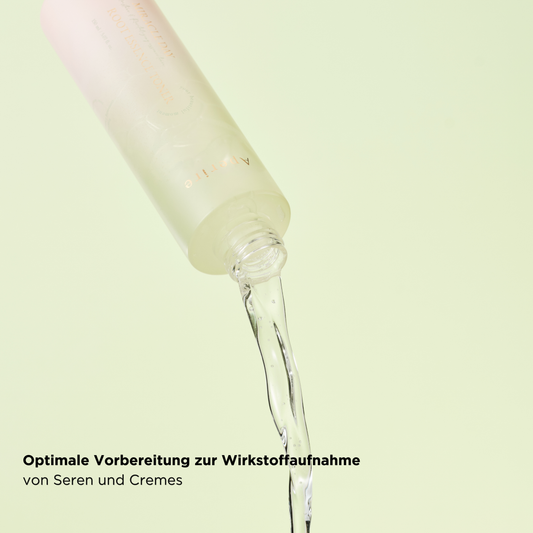
Do you use toner? A moisturizing toner optimally prepares the skin for hyaluronic acid.
-
Do you apply hyaluronic acid to damp skin? Only then can it bind water.
-
Do you seal the moisture afterwards? A cream or lotion is a must, otherwise everything evaporates.
-
How often do you exfoliate? Too frequent exfoliation weakens the skin and makes it more susceptible to moisture loss.
The Korean Beauty Approach: Layering with System
Korean skincare relies on the principle of layering – multiple thin layers of different products. A toner provides the initial moisture, followed by essences, serums, ampoules, lotions, and finally a cream. This system ideally supports the skin in retaining moisture in all layers.
Korean layering refers to the skincare routine where multiple products are applied successively in thin layers, rather than mixing everything at once or only using a rich cream. Typically, this involves ten or more steps: from cleansing to toner, essences, serums, and masks, all the way to moisturizer and sun protection.
The positive effect of layering lies in the fact that each layer specifically addresses a certain skin need – moisture, nutrients, anti-aging, or protection. Due to the thin application, the skin can optimally absorb each product, instead of being "overloaded" by a thick layer. This leads to:
-
Intensive Hydration: Hyaluronic acid, toners, and essences deeply moisturize the skin.
-
Better Absorption of Active Ingredients: Serums, antioxidants, or peptides work more effectively because the skin is prepared and not blocked.
-
Gentle Care: Through thin layers, the skin barrier is not disrupted, and irritation is minimized.
-
Individual Adjustment: Everyone can adapt the routine to their skin type, season, or needs – e.g., more moisture in winter, lighter in summer.
In short: Korean layering combines effectiveness with gentleness and ensures healthy, plump, and radiant skin that benefits long-term from consistent care.

Particularly popular and beloved: Toner pads with hyaluronic acid
Toner Pads are practical and effective – especially when enriched with hyaluronic acid. Hyaluronic acid can bind large amounts of water and ensures that the skin immediately looks plumper, smoother, and more hydrated.
Combined with a pad, moisture is evenly distributed to the skin, while the slightly textured surface simultaneously removes dead skin cells. The result: supple, radiant skin that is optimally prepared for subsequent skincare products.
Toner pads with hyaluronic acid are particularly popular because they are practical, fast, and easy to use. They save time, deliver the perfect amount of active ingredient at once, and can even be used as a mini-mask for an intensive moisture boost. Furthermore, they combine hydration and gentle exfoliation in one step, making them ideal for busy people or skincare beginners.
Their popularity also stems from the fact that toner pads are so versatile: there are variants for dry, sensitive, or impure skin, making them easy to integrate into any routine. Coupled with the noticeable smoothing and refreshing effect, it's clear why they have become one of the most popular trends in modern skincare worldwide.

Common Hyaluronic Acid Myths – and What's Really True
Myth 1: The more hyaluronic acid, the better. False. Too high a concentration can even dry out the skin if the formulation is not balanced. The combination with other moisturizing and protective ingredients is crucial.
Myth 2: One application is enough for the whole day. Hyaluronic acid has a temporary effect that depends on your environment and other skincare steps. Multiple thin layers – as in Korean layering – are more effective than one thick one.
Myth 3: Only dry skin needs hyaluronic acid. Oily skin can also be dehydrated. Hyaluronic acid helps all skin types improve moisture balance without being greasy.

Moisture is not only supplied to the skin from the outside
Moisture from within: How to further support dry skin
Dry skin cannot be treated solely with creams – it always reflects what is happening inside the body. Drinking enough water is the foundation, but how consistent and holistic the hydration is, is crucial. In addition to fluids, water-rich foods also play an important role. Cucumbers, watermelons, strawberries, or spinach not only provide water but also minerals and phytochemicals that support skin metabolism. They help the body to store moisture better and release it more evenly to the skin.
Equally important are healthy fats. Omega-3 fatty acids from flaxseeds, chia seeds, or walnuts strengthen the lipid structure of the skin barrier. Especially with dry skin, this protective layer is often weakened, causing moisture to evaporate more quickly. An adequate intake of these fatty acids can help reduce feelings of tightness and make the skin more resilient in the long term.
An often underestimated supporter is green tea. It acts as an antioxidant, protects skin cells from oxidative stress, and supports regeneration processes. At the same time, it provides moisturizing plant substances and can have anti-inflammatory effects – a plus, as dry skin often reacts more sensitively.
What you should do differently starting today
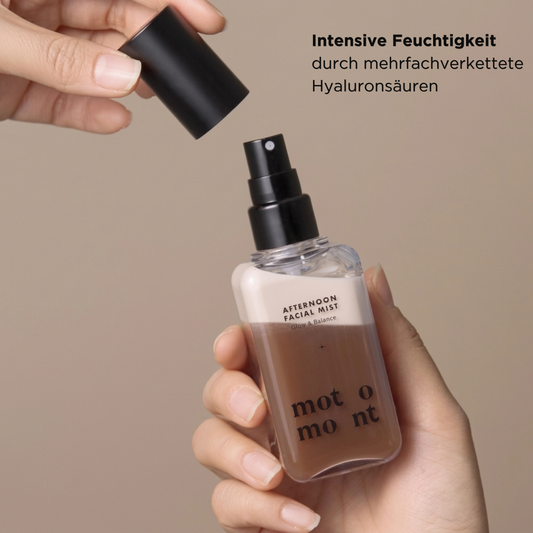
Especially for dry skin, the correct order of care determines its success. A toner should never be omitted, as it optimally prepares the skin for subsequent active ingredients and already provides it with initial moisture. Hyaluronic acid should always be applied to slightly damp skin – this way, it can bind water instead of drawing moisture from the skin. A facial mist or the toner applied beforehand is already sufficient.
Equally important is sealing in the moisture. A cream or emulsion as the last step prevents the previously built-up hydration from evaporating again. Also, be sure to adjust your routine seasonally: In winter, dry skin needs richer textures and more barrier protection, while in summer, lighter formulations are often sufficient.
Exfoliation can also be beneficial for dry skin – but only gently and moderately. Mild peels without abrasive particles help to loosen dry skin flakes and improve the skin's ability to absorb moisture without overstressing it. It is crucial to pay attention to your skin's signals: If it feels tight or reacts sensitively, it needs rest and regeneration instead of further active ingredients.
The Misu Skincare Tip
When working with hyaluronic acid, remember: it's not a solo artist, but a team player. Combine it with products that strengthen your skin barrier and lock in moisture. Especially in Korean cosmetics, you'll find clever formulations that do just that – you just need to use them correctly.
Avoid using hyaluronic acid in very dry air without a moisture boost – that can have the opposite effect.
For plump, hydrated skin, you don't need more products, but more understanding. Your skin will thank you.














2 comments
yzcan9
ol3dk3